조은지 Eunji Cho
Works
☣︎
✹
✸
✵
✷
✶
✮
❤︎
✾
⁍
❀
✿
Exodus_Mud Poem (2008 version)
Where is my Lucky
▲
✯
Exodus_Mud Poem
They got paid and left to take a break
✴︎
- Valigia Cantata Performance
- Discussion
- Bilboard
- Poster
✥
Texts
The Song of Sisters with Eight Eyes/ Jinshil Lee, 2020
Training the minds to go visiting Eunji Cho/ Eunna Bae, 2018
The Heat, the Wind: Eunji Cho’s Elemental Existentialism/ Heejin Kim, 2017
‘살아냄’을 그리는 아슬아슬한 풍경/ 김미정, 2017
Intimate Revolt: on Eunji Cho’s Falling Eggs/Ha Jin, 2016
Life and Earth/ Jang Un KIM, 2011
조은지의 진흙 퍼포먼스: 땅의 탈출에서 땅의 영매까지/ 최영숙, 2011
조은지: 언어를 거스르는 유쾌한 언어들/ 정은영, 2006
© Eunji Cho 2020

7 / 7
<
>
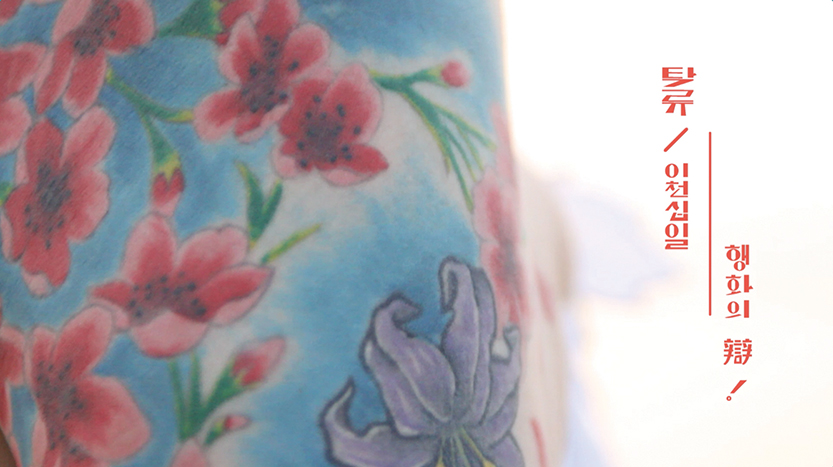
행화의 변
2011
싱글 채널 비디오, 컬러, 스테레오 사운드
5분
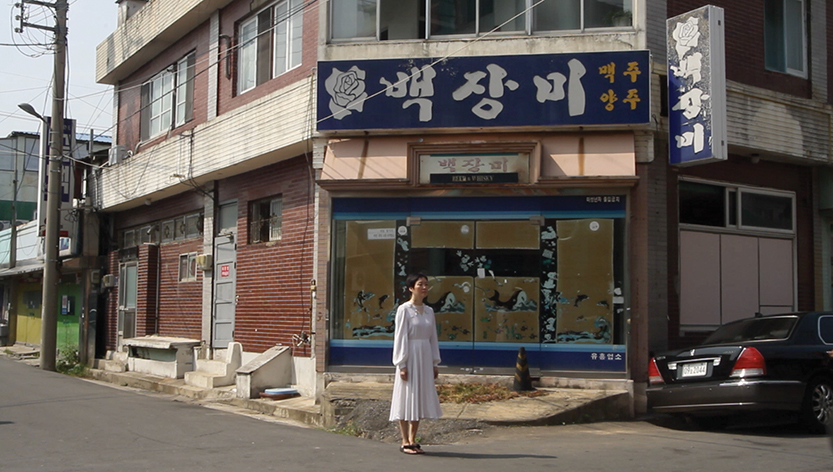
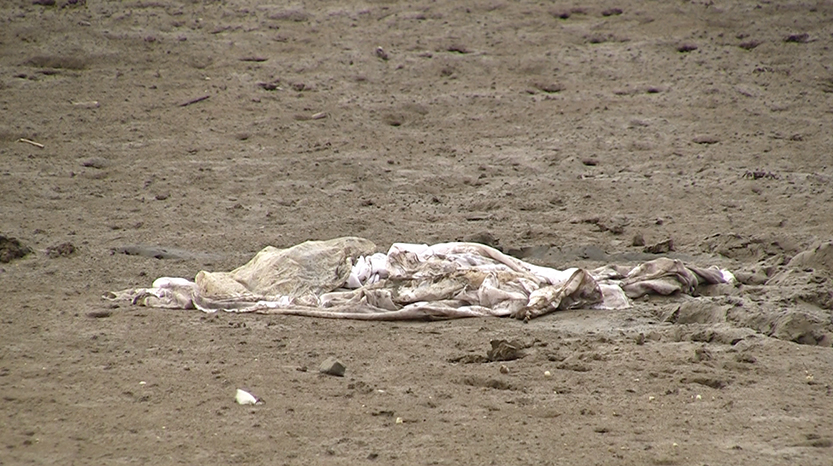
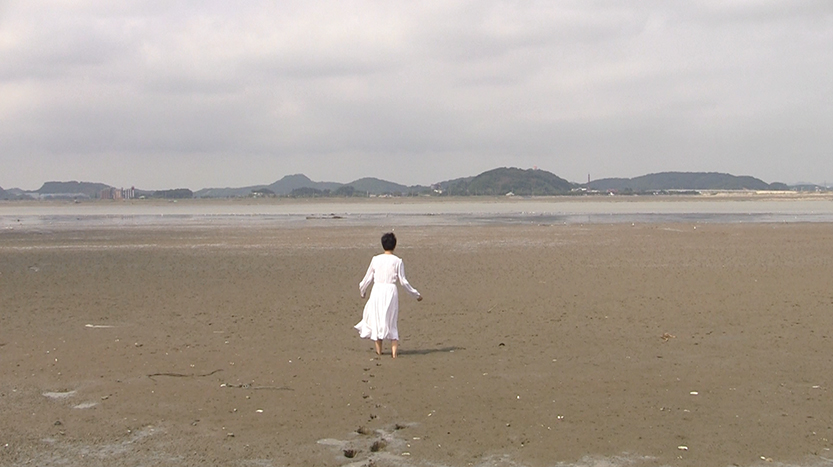
군산이라는 도시는 현실적 경제 감각을 담론의 주요 논제로 직면케 하는 장소입니다. 국가정치의 지표가 되는 수도권과 달리 군산은 중앙을 위한 경제적 득실 구조에서 계획 편성된 도시이기 때문에 일찍부터 개인이 스스로 자력갱생 해야 하는 돈의 논리가 현대 세상을 살아가는 정치만큼의 중요한 이치로 자리 잡았습니다.
작가 조은지는 군산이 배출한 자연주의 풍자 문학의 거장인 채만식의 대표작「탁류」를 대상으로 지역에서의 돈의 획득과 재산의 증식, 돈을 통한 정체성의 형성과 관계의 성립양상을 좇아봅니다. 그가 주목한 인물은 거리行(행)의 꽃華(화)이라는 이름의 기생 행화로, 행화는 격동하는 근대의 물살을 숙명적으로 받아들여 증거하는 전근대형 여주인공 초봉이와 첨예한 대립각을 이루는 인생의 자발적 운영주체입니다. 그 눔이 이쁘믄 그저 이뻤나? 돈을 주니 이뻤제로 시작하는 행화의 변은 엄연한 현실인식 하에서 기생이 연애를 열망할 필요도 없고 한량이 조강지처를 바랄 수도 없다는 쿨한 세상 이치를 역설하고 있습니다. 작가는 행화의 변을 소설에서 발췌하여 판소리 형식으로 들려주면서, 돈이 문제가 아닌 돈을 운영하는 이들의 욕망과 운영방식, 반대급부에 대한 기대치가 문제임을 경쾌하게 드러내고 있습니다. 행화는 잉여를 좇아 속고 속이는 주류인간들의 경쟁과 허세에서 흘러나오는 파편들을 굿이나 보고 떡이나 얻어 묵는 심사로 취득합니다. 행화는 공식 경제구조에서는 투명인간이지만 자신의 본분 이상을 탐내지않는 생존법으로 역설적인 자존의 상태를 획득합니다. 행화는 각축과 경쟁의 생존 방식 가운데 약육강식뿐 아니라 그 균열과 틈새를 유영하는 생존법이 있음을 피력하는 인물입니다. 근대질서와 가치체계의 몰락을 바라보는 그에게서 이미 수렴과 통합의 형국보다는 해체와 확산의 지형을 유영하는 탈근대 여성 주체의 모습이 엿보이지만, 안타깝게도 그는 사회의 공식적 층위에서는 부정과 익명으로 처리되는 비존재입니다.
탁류2011-행화의 변辯
아! 그눔이 이쁘문 그저 이뻤나?
돈을 주니 이뻤제
체! 당신 장가 안가구 있으문 언제
나한테루 장가 온다카덩기요?
내는 조강지처 바래지도 않소.
팔자에 타고난 화류계 물건이라고?
무얼 팔자 탄식은 하고,
첩이 싫다고 남의 조강지처나 바라고 그러는 거
내는 그만에 구역이 나더라, 제에!
또오 기생년이 뭣이나 연애한다고 껍덕대는 거
내 참 눈이 시어 못 보겠더라.
기생이 연애가 어데 당한 거꼬?
주제에 연애로 한다는 년도 천하 잡년,
기생년 하고 연애하자고 덤비는 놈팡이두 천하 잡놈
말두마소 그눔만 해두, 나하구 살로 섞고 지내문서
달리 색시하고 연애로 해서 장가 가지 않소?
그기 연애라요? 활량이 오입한 거 아니고?
오입 길게 하는 걸 갖소 연애라캐싸니
단단한 철부지 소리 아니요?
내 초봉이 질투 없습니다. 없을뿐만 아니라
어머니인척하면서도 밤에 데리고 자는 김씨처럼
강짜에 가슴을 쥐어뜯기는 하면서도,
일변 그들의 결혼에 대해서는 도맡아 가지고
일을 성취시켜 주듯이 엉큼스런 호의는 안하오.
도대체 오입판에서 언뜻 만나 잠시 같이 지내는 사내가
하상 좋고 나쁘고가 없는일
나한테는 아랑곳이 없는 일이다.
게다가 천하 난봉이지 별반 취할 곳이 없는
그러한 놈의 와이프가 된다는 아가씨가,
그래서 좀 애석하고 가엽다.
그래도 할수없지! 남의 일 내가 와 알아서.
넘어야 할 일 그냥 지나가덩가.
알고 겪든 모르고 겪든, 남 때문에 겪든 지 때문에 겪든
내가 할말 없다. 내 그 결혼식에가서
굿이나 보고 떡이나 얻어묵지!
The Street Flower
2011
single channel video, color, stereo sound
05:00
City of Gunsan now faces the “realistic economic sense” as the main subject of her discouse. Unlike the metropolitan cities where are the political indices of the central government, Gunsan was originally planned and positioned there only for supplying economic benefits of the central government. Regarding the historical background, there is certain belief and atmostphere that people in Gunsan fully realize the value of money as a surviving tactic in this contemporary world.
Eunji Cho starts her artistic journey with a reference novel Tak Ryu (The Muddy Stream) written by Chae Man-shik, a novelist born in Gunsan and known for his satirical bent. Her journey follows how people in Gunsan used to acquire money, increase property, identify themselves with capital and form relationships. She especially focusses on this character in the novel, Hang Hwa (行華, means flower of the street) who is a Korean geisha. ‘Hang Hwa’ creates a confrontation with the heroin, Cho Bong who accepted the life turbulance living in the modern era as her faith and pioneered her own life passively. Hang Hwa, on the other hand, justifies herself by such lines, “He ain’t just pretty. He’s pretty because he’s got the money.” Here she stressed out her cool nature towoards the universal law of the world. She is a kind of woman who believes that a geisha doesn’t necessarily dream for a love relationship and a playboy shall not have his own wife. The artist Cho extracts
Hang Hwa’s line from the novel and re-creates it in a form of Pansori, the Korean traditional vocal performance. Here she cheerfully emphasizes on that the key problem isn’t the money itself, but the desire for it, the way of managing money and the expectation in exchange of money. In the novel, Hang Hwa sits back from the mainstream life cycle, only enjoys the ride and acquires her own benefits from overflowing bluff. Within the official economic pyramid, Hang Hwa is just an unidentified existence, but she acquires her capitalistic status, because she’s never greedy for more than her destiny. Hang Hwa is a character who expresses a way to survive in the competative world where the winners take all, just like she swims between the fragments and gaps of others. There we can find a glimpse of postmodern female character who observes the collapse of modern standard and value and meanders through the geography of deconstruction and new expansion. However, she’s still an unidentified existence in the official layer of our society.